

Scouring pads can scratch stainless steel, but whether they do depends on the pad material, the abrasive grade, the surface finish of the stainless steel, and how you use the pad. Many people assume stainless steel is scratch-proof because it is durable and corrosion-resistant, yet the surface can still be marked by abrasives, especially on polished or mirror finishes. The good news is that most scratches caused by scouring pads are surface-level and preventable with the right pad choice and correct cleaning technique.
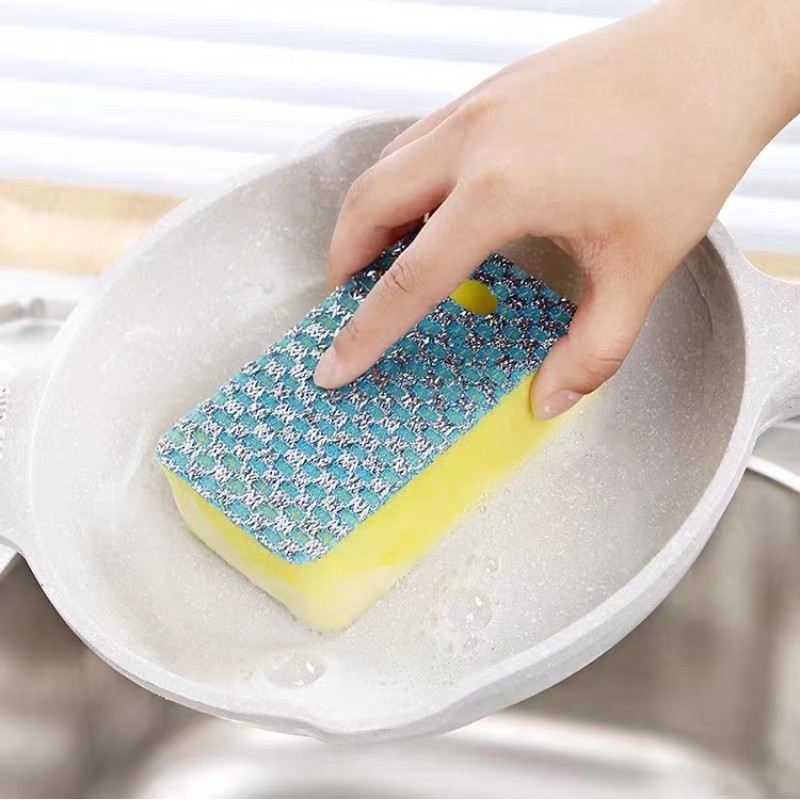
Guanqi scouring pads are designed to cover different cleaning tasks, from daily dishwashing to heavy-duty grease removal, helping users balance cleaning efficiency and surface protection. You can view the product range here: Scouring Pad
Why stainless steel scratches more easily than many people expect
Stainless steel is strong, but its surface finish is still a metal layer that can be mechanically abraded. Scratches occur when a harder abrasive particle drags across the surface and cuts micro-grooves into it. This is more noticeable on glossy finishes because light reflects uniformly on a polished surface, so any micro-line breaks the reflection and becomes visible.
A brushed stainless surface can hide small marks better because it already has directional texture. A mirror finish shows scratches more quickly because it has very little texture to mask abrasion.
Which scouring pads are most likely to scratch stainless steel
Not every scouring pad behaves the same. The risk is driven by abrasive hardness, particle size, and how densely the abrasive is bonded.
Here are the most common pad types and their typical scratch risk.
-
Metal scouring pads
Steel wool and metal wire pads are effective for burnt-on residue, but they can scratch stainless surfaces quickly, especially if pressure is high. They can also leave metal fragments behind that later oxidize, creating rust-colored spots on stainless even when the stainless itself is not rusting. -
Heavy-duty synthetic abrasive pads
Some synthetic pads are engineered for aggressive scrubbing. These can scratch polished stainless and may also dull brushed finishes if used repeatedly in the wrong direction. -
Soft sponges with light abrasive layers
Many kitchen sponges have a green or darker scrubbing layer. Some are mild enough for certain stainless surfaces, but others are still abrasive enough to create visible micro-scratches, especially on shiny finishes. -
Non-scratch pads
Non-scratch pads are formulated to reduce scratching risk by using finer abrasives and controlled bonding. They still remove residue, but they are less likely to cut visible grooves when used correctly.
A safe selection rule is simple: the more aggressive the pad is at removing baked-on residue without soaking, the higher the chance it can scratch stainless steel.
Practical scratch-risk table for common situations
This table helps buyers match pad type to task and stainless finish.
| Cleaning task | Stainless finish risk level | Recommended pad direction | Typical pad choice |
|---|---|---|---|
| Daily dishwashing and light stains | Low | Along grain | Non-scratch pad |
| Fingerprints, water spots | Very low | Along grain | Soft pad or cloth |
| Grease film on cookware | Medium | Along grain | Mild abrasive pad |
| Burnt-on residue | High | Along grain, low pressure | Heavy-duty pad after soaking |
| Polished or mirror surfaces | High | Along grain, minimal pressure | Non-scratch only |
Along grain means scrubbing in the same direction as the brushed texture, not in circles. Circular scrubbing increases visible cross-scratches, especially on brushed stainless.
How to test a scouring pad before using it on stainless steel
If you are unsure whether a pad will scratch, test it first. This avoids damaging the most visible areas.
-
Choose a hidden area
Use the underside of cookware, an inner rim, or a back corner of a stainless sink. -
Use light pressure and a short stroke
Do not apply full force. Move in a straight line in one direction. -
Rinse and dry to inspect
Scratches are easier to see when the surface is dry and light reflects at an angle.
If the pad leaves visible lines, reserve it for less sensitive surfaces or for heavy-duty tasks where appearance is not critical.
How to use scouring pads on stainless steel without creating visible scratches
Even with a suitable pad, technique matters. Many scratches are caused by excessive pressure and wrong motion.
-
Clean along the grain
Brushed stainless steel has a visible direction. Scrubbing along that direction helps new micro-marks blend into the existing finish. -
Reduce pressure and let chemistry do the work
Warm water, dish detergent, and short soaking time soften grease and reduce the force needed. Less force means fewer scratches. -
Avoid dry scrubbing
Dry abrasive contact increases friction and makes scratches deeper. Keep the surface wet and use enough cleaning solution to lubricate. -
Rinse frequently
Food particles and grit trapped in the pad can act like sandpaper. Rinsing removes those particles and reduces scratch risk. -
Use a two-step method for heavy buildup
First soften the residue with soaking or a cleaner. Then use a stronger pad only if needed. This approach reduces the number of abrasive passes.
Why some marks look like scratches but are not permanent
Stainless steel often shows marks that appear to be scratches but are actually:
- Transfer marks from cookware or softer metals
- Mineral deposits and dried water spots
- Residue lines from oils or cleaners
- Micro-abrasion haze that can be improved with proper polishing
A quick check is to wipe the area with warm soapy water, rinse, and dry. If the mark fades significantly, it was likely residue rather than a deep scratch.
Choosing the right Guanqi scouring pad for stainless steel tasks
The best scouring pad choice depends on the cleaning job and how visible the stainless surface is. Guanqi provides scouring pad options for daily and heavy-duty cleaning, so users can select the correct abrasive level instead of relying on one pad for every situation. This helps protect stainless surfaces while still cleaning efficiently.
For buyers who want consistency across kitchen use, retail supply, or hospitality procurement, standardizing pad types by task can reduce surface damage complaints and improve user experience.
Explore Guanqi scouring pads here: Scouring Pad
Common questions about scouring pads and stainless steel
Can I use a scouring pad on a stainless steel sink
Yes, but use a non-scratch or mild pad and scrub along the grain. Avoid metal pads and avoid circular scrubbing on visible surfaces.
Why do I see dull areas after scrubbing
Abrasive pads can change the surface reflectivity by creating fine micro-lines. This is more noticeable on polished stainless. Switching to a milder pad and using correct technique helps prevent repeated dulling.
Are scratches a hygiene problem
Most surface scratches are cosmetic. Stainless remains hygienic when cleaned properly. Deep gouges, however, can trap residue, so preventing heavy scratching is beneficial.
Can scratches be removed
Light scratches can often be reduced by polishing along the grain with appropriate stainless steel cleaner or polishing compound. Deep scratches may require professional refinishing.
Conclusion
Scouring pads can scratch stainless steel, especially if they are metal-based or heavy-duty abrasive pads, or if they are used with high pressure and circular scrubbing. The best prevention is selecting the correct pad for the task, scrubbing along the grain, keeping the surface wet, and rinsing grit from the pad frequently. Guanqi scouring pads offer options for different cleaning strengths so users can remove residue efficiently while protecting stainless surfaces.